
One of the most important tasks of the Saami Climate Council is to produce a knowledge base on the effects of climate change on Saami culture. The Climate Council project PRESAAMI2, “the establishment of the Saami Climate Council’s knowledge base” has met this challenge. The research material has included meteorological material, a workshop for holders of Saami traditional knowledge, research literature and material from the SAAMI- adaptation of Saami people to climate change – project.
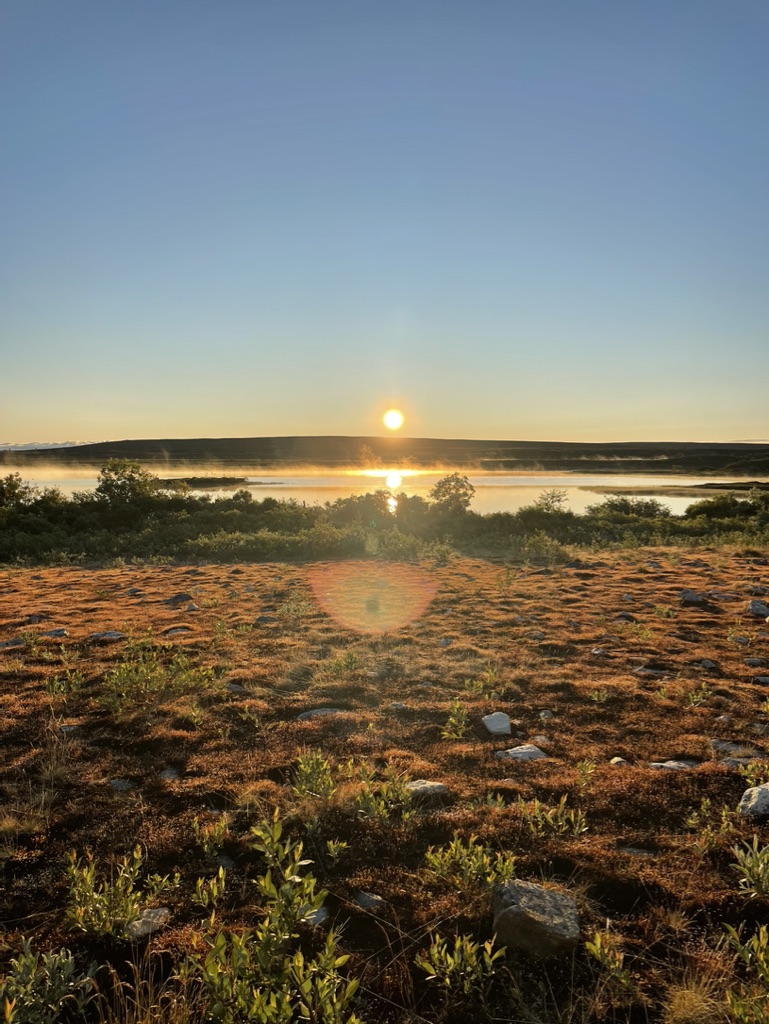
Holders of Saami traditional knowledge have observed changes in climate and conditions since the 1990s. Afforestation and shrubification have changed and continue to change the landscape of the Saami homeland, making it difficult to practice traditional Saami livelihoods and making it difficult for the reindeer to find nutrition. The report highlights the latest research findings on the effects of reindeer grazing on carbon sequestration and mitigation of the effects of climate change. What is worrying about the mitigation of climate change and the traditional knowledge of the Saami is the small number of the Saami population in the Saami homeland and the uncertainty about the future of reindeer herding. Measures are therefore needed both to secure the conditions for reindeer herding and to mitigate the changes in vegetation brought about by climate change.
In addition to reindeer herding, the report discusses the effects of climate change on other Saami livelihoods. The impacts of climate change on fisheries are accelerating. This means changes in fish species, the success of spring spawning fish, and the decline of salmonids. The Atlantic salmon stock is negatively affected by climate change in both marine and river ecosystems.
The project has considered the future of Saami culture and the factors that influence it. Based on the research data, the future of Saami culture is affected by 1) internal factors of the Saami community and population, 2) climate change, 3) measures of society, 4) global climate policy and climate actions, 5) world political situation, and 6) possibilities to practice traditional livelihoods in the future.
Thus, the future of Saami culture in a warming climate will not be solved by the internal actions of the Saami community and national measures alone. The Saami are part of the global world. Indeed, the future of Saami culture is influenced by several different factors, and it is crucial to mitigate climate change on a global level. It is also crucial that the Saami population will remain and return to Saami homeland. For the Saami population to remain in the Saami homeland, the Saami homeland and traditional livelihoods must be vital. The effects of climate change will accelerate. The legislation governing reindeer herding and subsidy system must be prepared for the effects of climate change. The green transition has not yet brought infrastructure projects to the Saami homeland, but plans have been put forward to promote the projects. The green transition must be implemented fairly in terms of Saami culture and the Saami legal status.
Adapting to climate change requires the Saami community to have faith in the future, as well as the transfer of Saami traditional knowledge and skills from one generation to the next. The crucial question for the future is whether current Saami children and young people have opportunities to practice traditional livelihoods and whether they will remain in the Saami homeland. Adapting to climate change in a culturally sustainable way is only possible if the Saami community is vital.
The project found that the observations of Saami traditional knowledge holders on climate change are supported by research data and climate science material. Holders of Saami traditional knowledge have observations for which there is no research data yet. By combining the observations of the Saami traditional data holders with the researched data, new knowledge can be produced on the effects of climate change. The project proposes that the impacts of climate change be systematically monitored using indicators.
Separate blog posts will be published on the climate and warming in the Saami homeland now and in the future, as well as on the health and well-being of the Saami people. The project has been implemented by CERH (University of Oulu) and the Finnish Meteorological Institute.
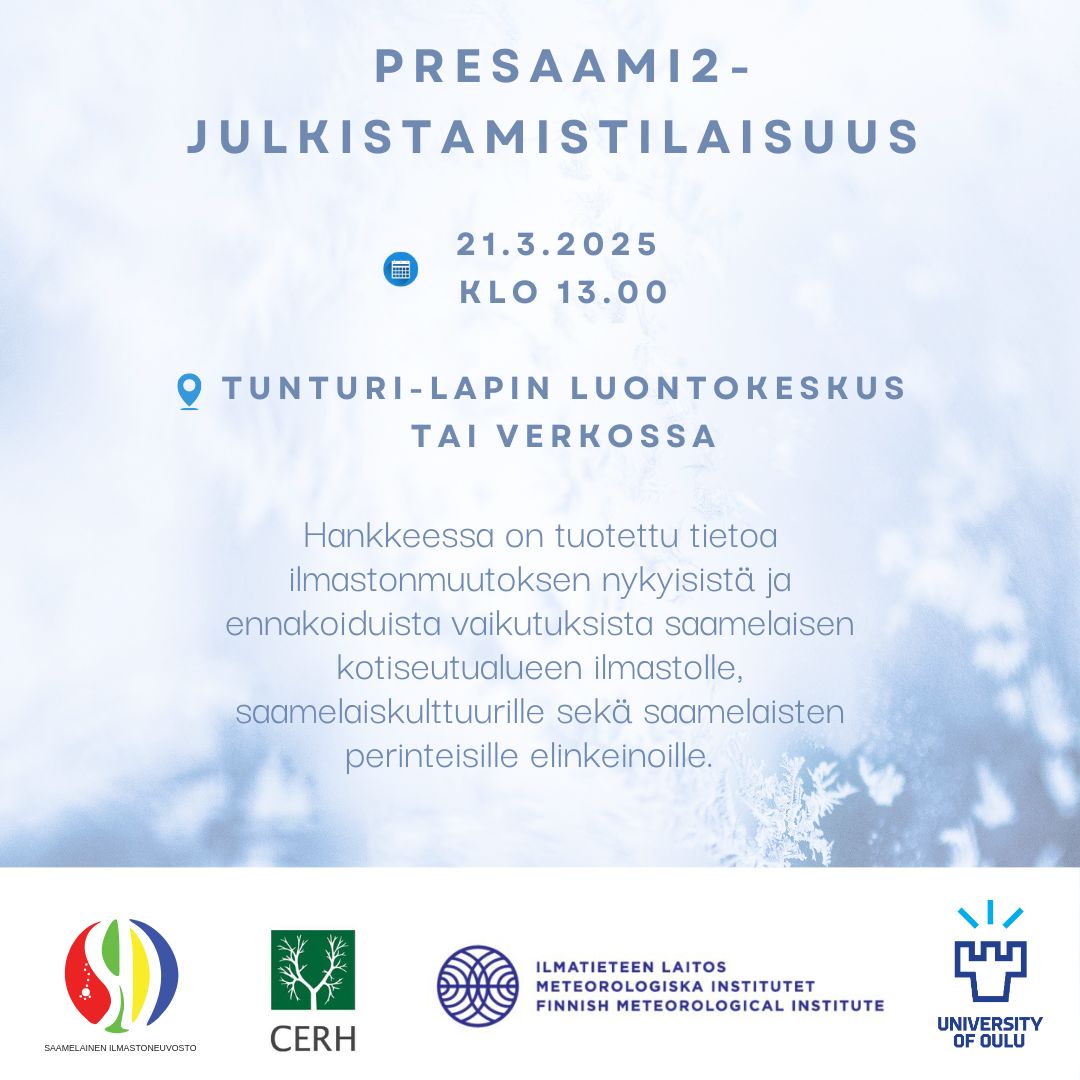
The results of the project will be presented in an open seminar at the Tunturi-Lappi Visitor Centre in Hetta. The event will start at 13:00 on Friday 21 March 2025. The following reports will be published at the event: The current and anticipated effects of climate change on Saami culture (in Finnish) and Saami traditional knowledge in the work of the Saami Climate Council (in Finnish). The event is held in North Sami and Finnish. More information on this link:
Klemetti Näkkäläjärvi
Chairman of the Saami Climate Council
Second responsible project leader of PRESAAMI2